
Quick Answer
To increase fibre without bloating, add it gradually rather than changing your entire diet overnight. Introduce one higher-fibre food at a time, begin with modest portions, spread fibre across meals, and drink enough fluid. If gas, cramps, diarrhoea, or constipation worsens, slow the increase and reassess the foods or portions you added.
Fibremaxxing sounds like a challenge to eat as much fibre as possible, but your digestive system usually responds better to steady improvement than sudden overload. A breakfast packed with bran, chia seeds, berries, and a fibre bar may look healthy, yet it can deliver far more fermentable material than your gut is used to handling.
This guide explains how to increase fibre without bloating, which foods may be easier to introduce first, and how to build a practical two-week routine. The goal is not to chase the highest number. It is to create a varied, food-first eating pattern that supports digestion and is comfortable enough to maintain.

What Is Fibremaxxing?
Fibremaxxing is a social-media term for deliberately increasing dietary fibre, often by adding more fruit, vegetables, legumes, whole grains, nuts, seeds, or fortified products. The useful part of the trend is its focus on a nutrient many people overlook. The risky part is the word “maxxing,” which can encourage people to increase intake too quickly.
Dietary fibre is the part of plant food that is not fully digested in the small intestine. Soluble fibre can form a gel-like material, while insoluble fibre adds bulk and supports movement through the digestive tract. Most plant foods contain a mixture of both, so variety matters more than trying to isolate one “perfect” type.
Why Can Increasing Fibre Cause Bloating?
Some fibres are fermented by bacteria in the large intestine. Fermentation is normal, but it can produce gas. If your usual diet is low in fibre and you suddenly add large portions of beans, bran, inulin-fortified snacks, and seeds, the amount reaching your colon may rise faster than your digestive system can comfortably adapt.
Fibre also interacts with fluid. Without enough liquid, a rapid increase in bulky fibre may make stools harder or more difficult to pass in some people. This is why gradual changes and adequate hydration are repeatedly recommended by major health organisations.
Bloating is also influenced by meal size, how quickly you eat, constipation, lactose intolerance, irritable bowel syndrome, and other digestive conditions. Fibre is not always the only cause.
How Much Fibre Do Adults Need?
General recommendations vary by age, sex, and national guideline. One widely used range for adults is approximately 22–34 grams daily, while other guidance commonly lists 25 grams for younger women and 38 grams for younger men. These are reference values, not a command to jump immediately from a low intake to the upper end.
A better starting point is to estimate your current pattern and make small changes. For example, adding one portion of fruit and replacing one refined-grain serving with a whole-grain option may be more comfortable than attempting a complete high-fibre overhaul in one day.
Practical rule: Change one meal or snack at a time. Keep it consistent for several days before adding another major fibre source.
A Practical Two-Week Plan to Increase Fibre Gradually
Days 1–3: Improve one familiar meal
Choose a meal you already eat regularly. Add a small, predictable source of fibre rather than creating an entirely new menu.
- Add a small portion of berries or sliced pear to breakfast.
- Choose oats instead of a low-fibre cereal.
- Replace white bread with a whole-grain version you tolerate.
Days 4–7: Add one cooked plant food
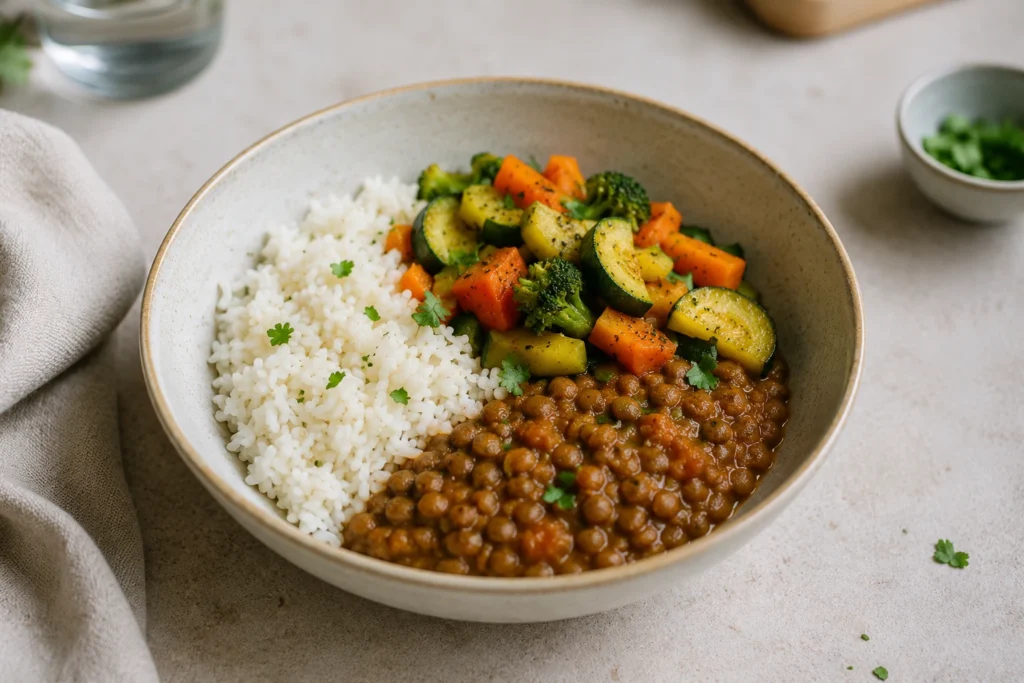
Cooked vegetables and modest portions of pulses may feel easier than suddenly eating very large raw salads.
- Add cooked carrots, spinach, pumpkin, or green beans to lunch or dinner.
- Mix a few tablespoons of lentils or chickpeas into rice, soup, or curry.
- Keep portions moderate and observe your response.
Days 8–10: Spread fibre across the day
A large fibre dose at one sitting may be harder to tolerate than smaller amounts across breakfast, lunch, dinner, and snacks.
- Choose whole fruit instead of juice.
- Add vegetables to two meals rather than piling them into one.
- Use nuts or seeds in a small serving, not by the handful.
Days 11–14: Increase variety, not just quantity
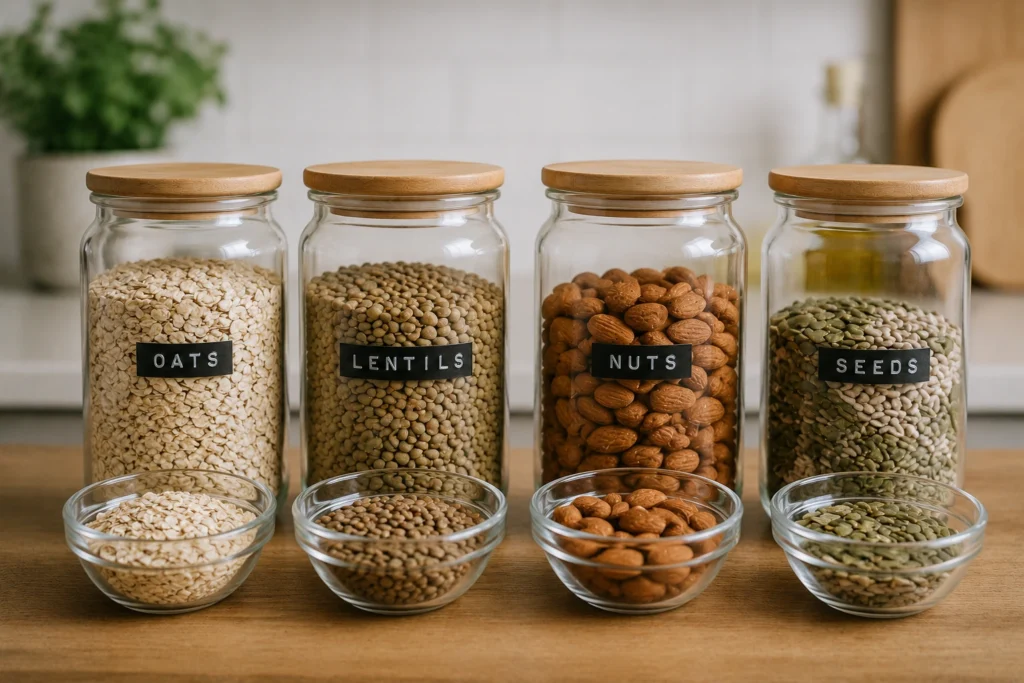
Rotate oats, fruit, vegetables, beans, whole grains, nuts, and seeds. Variety provides different fibres and other nutrients. It also prevents the diet from becoming dependent on one fortified cereal, powder, or snack bar.
Beginner-Friendly Fibre Foods and How to Introduce Them
Food First or Fibre Supplements?
Whole foods are usually the most useful foundation because they provide different fibres alongside vitamins, minerals, and other plant compounds. A supplement may be appropriate in some situations, but it should not automatically be the first step.
If you use a fibre supplement, follow the product directions, begin cautiously, and check with a qualified healthcare professional when you take medicines or have a digestive condition. Some products require adequate fluid and may affect how certain medicines are taken.
For a deeper comparison, link this section to a future guide on fibre supplements versus whole foods.
Common Fibremaxxing Mistakes
- Changing every meal at once. This makes it difficult to identify which food or portion caused discomfort.
- Stacking multiple concentrated sources. Bran cereal, chia seeds, a fibre bar, beans, and a supplement in one day can be a major jump.
- Ignoring fluids. Fibre works with water, although fluid needs differ between individuals.
- Assuming more is always better. Comfort, stool pattern, diet quality, and consistency matter more than winning a numerical challenge.
- Relying only on packaged products. “High fibre” does not automatically mean balanced, minimally processed, or easy to tolerate.
- Ignoring persistent symptoms. Ongoing pain, major bowel changes, or unexplained weight loss need medical assessment rather than another diet hack.
You can also support this section with a future internal guide to everyday hydration and fluid needs.
Who Should Be Cautious About Increasing Fibre?
Speak with a doctor or registered dietitian before making a major fibre change if you have inflammatory bowel disease, a known intestinal narrowing or stricture, gastroparesis, recent gastrointestinal surgery, persistent constipation, difficulty swallowing, unexplained digestive symptoms, or a history of bowel obstruction.
Seek prompt medical care for severe or worsening abdominal pain, repeated vomiting, blood in the stool, black stools, unexplained weight loss, fever with digestive symptoms, or a prolonged change in bowel habits.
Frequently Asked Questions
How quickly should I increase fibre?
There is no universal schedule, but gradual changes over several weeks are commonly advised. Keep each change small enough that you can observe your digestion before adding another concentrated source.
Does your body adjust to more fibre?
Many people become more comfortable as their diet changes gradually. However, persistent bloating is not something you must simply tolerate. Portion size, fibre type, constipation, and digestive conditions may all matter.
Can too much fibre cause constipation?
A rapid increase, especially without enough fluid or in someone with certain digestive problems, may worsen constipation. Reduce the pace and seek professional advice if symptoms persist.
Which fibre foods are easiest for beginners?
Cooked oats, whole fruit in moderate portions, cooked vegetables, and small servings of lentils or chickpeas are practical starting options. Tolerance varies, so introduce foods individually.
Is soluble fibre better than insoluble fibre?
They perform different functions, and most plant foods contain both. A varied food-first diet is usually more practical than trying to select only one type.
Do I need a fibre supplement?
Not necessarily. Many people can improve intake through food. Supplements may help in specific circumstances, but they should be used carefully and may require professional guidance.
Why do fibre bars make me gassy?
Some bars contain added fermentable fibres such as inulin or chicory-root fibre. These can produce gas in some people, especially when several fortified products are eaten together.